
Clock 11% growth in the first 11 months of 2022.

The Chinese dependence is far from over, industry players are also citing a shortage of electronic toys in the country.

Reliance Industries Limited (RIL) has been one of the top performing companies in the large cap space under the chairmanship of Mukesh Ambani and has beaten the broader market both in terms of earnings growth and shareholder returns. In the last 20 years, RIL's net profit has grown at a compound annual growth rate (CAGR) of 15.7 per cent while its net sales have grown at a CAGR of 15.1 per cent. RIL's net profit at consolidated level has jumped 18.5 times in the last two decades growing from Rs 3280 crore in FY02 to Rs 60,705 crore in FY22; its net sales grew 16.6 times from Rs 42,129 crore to Rs 6.99 trillion.

The average top executive monthly compensation is Rs 1 crore. The median employee salary is now Rs 820,000.
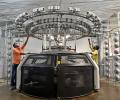
Manufacturing companies have been outperformers on the bourses in the current year, leading to a rise in their weighting in the benchmark index. Companies in sectors such as FMCG, automobile, pharmaceuticals, metals, cement, and agrochemicals now account for 25.43 per cent of the Nifty 50 index, up 88 basis points from 24.55 per cent at the end of December last year and a record low of 23.1 per cent at the end of CY20. The manufacturing sector is now dominated by FMCG majors such as Hindustan Unilever, ITC, Asian Paints, Nestle, and Britannia, accounting for 45 per cent of the combined market cap of all manufacturing companies in the index.

Assessment year 2020-2021 saw returns filed fall to 69.7 million and stood at 71.4 million in assessment year 2021-2022.

But the industry's chief executives remain confident of the long-term growth potential of NBFCs in India, given their specialised lending on the asset side, last-mile reach, and a well-capitalised balance sheet. "Over the years, NBFCs have faced many crises.

Banks are gaining market share at the expense of non-bank lenders such as housing finance companies, retail lenders, and those giving gold loans. There has been a steady decline in the market share of non-banking financial companies (NBFCs) in the credit market as banks have stepped up lending. NBFCs' share declined to a five-year low of 19.8 per cent in the first half of FY23, down from 20.3 per cent in H1FY22, and an all-time high of 23.1 per cent in H1FY19.

If reports that Apple Inc plans to triple its iPhone production in India come true, it is likely to help the country become a supply hub for the American company. There are some 190 Apple suppliers globally, but only 12 have manufacturing facilities in India now. Apple's strategy is to focus on India and a clutch of other countries as it diversifies its supply chain out of China.

Adani Enterprises' proposed Rs 20,000 crore (Rs 200 billion) fundraising via fresh issue of equity shares through a public offer would be the fourth biggest by Indian companies, excluding banks and non-banking financial companies.

The race for space has got real, and it is attracting funding like never before. In 2022 so far, funding to private players in the space sector has jumped a whopping 61.5 per cent - soaring to $108.52 million compared to $67.2 million in 2021. Propelling it is the government's decision to open up the space sector to private players and the work done by companies like Skyroot Aerospace, the Hyderabad-based start-up behind the launch of India's first privately developed rocket on November 18.

'The current launch is a sounding rocket, this cannot be called a milestone. The importance is this is for the first time a private player is doing it.'

Some of India's largest companies have seen a slowdown in the growth of temporary, contract and casual jobs, as compared to the increase in their total workforce. The absolute number of such jobs is up 30 per cent between financial year 2017-18 and 2021-22 (FY18-22), shows an analysis of data collated from the annual reports of S&P BSE 100 companies. Forty-eight firms were considered for the final analysis based on the availability of uniform data across the last five years. In comparison, the total workforce numbers are up 36 per cent in the same period.

Amid increasing volatility and recession fears looming over global markets that has led to the decline in wealth of a number of billionaires, Gautam Adani was the only one to buck the trend. The billionaire added $43.3 billion in net worth between Diwali 2021 (November 4) and this year's Diwali (October 24) according to Bloomberg data. He added more wealth than the gross domestic product (GDP)of more than a dozen Indian states.

Mamallapuram's Group of Monuments -- a collection of 7th- and 8th-century religious structures -- attracted 46 per cent of the total foreign tourists who visited India compared to 12 per cent by the Taj.

On Sunday, at 12.07 am in Sriharikota, off the coast of the Bay of Bengal, it was almost like an early Diwali, with the sky lit up by the launch of 36 OneWeb satellites. The Indian Space Research Organisation (Isro) did the launch on a 43.5-metre-tall Geosynchronous Satellite Launch Vehicle Mark III (GSLV Mk III) rocket. After the countdown, which started 24 hours in advance, once the mega screen marked the launch, a select group of invitees at the gallery cheered by applauding the feat.

Spectrum allocation for satellite services came up as a dominant theme at the launch of 36 communication satellites by OneWeb, a Bharti group venture, here on Sunday. Following the launch, Bharti Enterprises chairman Sunil Mittal, in a conversation with a group of reporters, reiterated that spectrum auction did not make sense in the case of satellite services. "This (satellite services) is not competing with mobile services where you can justify the auction.

All nine Adani stocks saw a rise in their share price in H1FY23, ranging from 6.1% in case of Adani Ports to 102% in case of Adani Power.

Gold prices are struggling and are down 18 per cent from their March highs. But stock prices have fallen even more. As a result, the precious metal has begun to outperform equities - both in the domestic market and international markets. Gold prices are up 2.6 per cent in the domestic market in the current calendar year (CY22) so far, according to the World Gold Council (WGC), compared to a 1.7 per cent decline in the Sensex year-to-date (YTD).

India's equity markets are on a roller-coaster ride, after delivering spectacular returns for two consecutive years - in 2020 and 2021. The benchmark National Stock Exchange's (NSE's) Nifty50 is down 1.5 per cent in the first nine months of the current calendar year 2022 (CY22) as foreign portfolio investors sold Indian stocks due to rising bond yields in the US and across global markets, including India. The sell-off in the Indian equity markets has, however, not been broad-based and largely limited to sectors facing earnings headwinds from rising interest rates, lower commodity and energy prices, and likely economic recession in advanced economies.
 © 2026 Rediff.com - Investor Information - Advertise with us - Disclaimer - Privacy Policy - Sitemap - Feedback - About us - Terms of use - Grievances